Vintage Canva: A Bold Handwritten Font That Gives Your Small Business Brand a Distinct Voice
Every small business owner knows the struggle of wanting to look professional without losing personality. You are not a faceless corporation. You are a bakery owner who wakes up at 4 a.m. to knead dough, a candle maker who tests wax blends late into the night, or a boutique owner who personally curates every rack. Your brand materials should feel just as human as the work you put into your business. That is precisely why the right typeface matters more than most entrepreneurs realize. A font like Vintage Canva can bridge the gap between polished and personal, giving your business a cohesive look across everything from product labels to social media posts.
What Makes Vintage Canva Stand Out for Business Branding
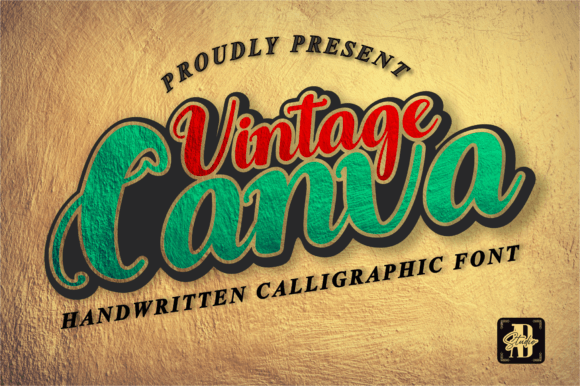
Vintage Canva is not another generic script font that blends into the crowd. It is a calligraphic handwritten bold font with a clean, confident stroke. The letters carry weight without feeling heavy. They have movement without becoming messy. This balance makes it incredibly versatile for small business owners who need a single typeface that works in multiple contexts. Whether you are designing a logo for a coffee roastery or formatting a heading for an Instagram sale announcement, Vintage Canva holds its own.
The font sits firmly in the Script Amp category, which means it brings a natural, hand-drawn rhythm to your text. That handwritten quality signals authenticity. Customers today are drawn to brands that feel real, and a font that looks like it was drawn by a skilled hand rather than generated by a machine communicates care and attention to detail. For a small business, that first impression can be the difference between a scroll-past and a click-through.
Practical Ways to Use Vintage Canva Across Your Business
The real value of a premium font like Vintage Canva lies in how many touchpoints it can elevate. Here are several realistic applications where this typeface can make your brand materials more effective:
Logos and Wordmarks
Your logo is often the very first encounter a potential customer has with your business. Vintage Canva works beautifully as a standalone wordmark for brands that want a warm, approachable identity. A handmade soap company could use it to spell out its name on product labels. A wedding photographer could incorporate it into a watermark. The bold strokes ensure the text remains legible even when scaled down for a business card or scaled up for a storefront sign.
Product Labels and Packaging Design
If you sell physical products, your packaging does a lot of the selling for you. A font that looks elegant on a candle jar or a chocolate box adds perceived value. Imagine a lavender-scented candle with the fragrance name set in Vintage Canva on a cream-colored label. The handwritten feel suggests artisanal care. It tells the customer that this product was made with intention, not mass-produced in a factory. For product labels, using Vintage Canva as a display font for the product name and pairing it with a cleaner sans serif font for ingredients or instructions creates a balanced, professional look.
Social Media Graphics and Digital Ads
Social media moves fast. Your visuals need to stop the scroll. Vintage Canva is bold enough to command attention in a square Instagram post, a Pinterest pin, or a Facebook ad. Use it for quotes, sale announcements, or product launches. Because it is a handwritten font, it adds a personal touch to graphics that might otherwise feel templated. A coffee shop could use it to highlight a seasonal drink special. A boutique could use it to announce a flash sale. The font gives your digital presence a consistent visual thread that builds recognition over time.
Menus, Flyers, and Printed Materials
For brick-and-mortar businesses, printed materials still matter. A café menu set in Vintage Canva for the drink categories invites customers to linger. A flyer for a pop-up market feels more like a personal invitation than a mass-produced handout. The font works especially well on thank-you cards, stickers, and small notes that you slip into customer orders. Those little touches build loyalty. They make your business memorable.
Website Banners and Email Headers
Your website is your digital storefront. Using Vintage Canva for your main heading or hero banner text immediately sets the tone. It pairs naturally with a clean serif font or a neutral sans serif font for body copy. The contrast between a bold handwritten headline and a simple supporting typeface creates visual hierarchy. Visitors know where to look first, and that clarity improves the user experience.
Why Font Consistency Builds Trust with Your Customers
Consistency is the unsung hero of small business branding. When a customer sees your logo on a product label, then recognizes the same typeface on your Instagram post, and again on your website banner, a subtle trust builds. They start to associate that visual identity with your business. Vintage Canva gives you the ability to maintain that consistency across every channel without needing a dozen different fonts. One strong, versatile typeface can become the backbone of your entire brand identity.
Using the same font across packaging, digital ads, and printed materials also saves you decision fatigue. You are not endlessly choosing new fonts for each project. You have your anchor. That leaves you more time to focus on product development, customer service, and growing your business.
Readability Considerations for Real Business Settings
A font that looks stunning in a preview can fail in real-world use if it is not readable at small sizes or on mobile screens. Vintage Canva handles this well because of its bold, clean letterforms. The strokes are not overly thin or fussy. That means you can use it on a small lip balm label or a mobile Instagram story without losing clarity. For body text or long paragraphs, however, a creative font like this is best reserved for headlines, short phrases, and accent use. Use it to grab attention and let a simpler typeface carry the reading experience.
Test your materials at actual size before committing. Print a label mockup at the real dimensions. View your social media graphic on a phone screen. If the text is still clear and impactful, you have found a font that works for your specific needs.
Font Pairing Ideas to Elevate Your Brand
Vintage Canva is a strong display font. It performs best when paired with a neutral counterpart that does not compete for attention. A clean sans serif font like a classic geometric or humanist style balances the decorative quality of the handwritten script. This pairing works well for pricing on a menu, ingredient lists on packaging, or body copy on a website. Alternatively, a simple serif font with low contrast can add a touch of sophistication without overpowering the headline. The key is to let Vintage Canva lead the visual story while the supporting font provides readability and structure.
Avoid pairing it with another busy script or handwritten font. That creates visual noise and confuses the hierarchy. Keep it simple. One expressive voice and one quiet support is all you need.
When to Use Vintage Canva as Your Main Font and When to Hold Back
Vintage Canva works best as a logo font, headline font, or accent font. Use it for your business name, product names, section headers, pull quotes, and short promotional phrases. It is not ideal for long paragraphs, shipping policies, or ingredient lists. Reserve it for moments that need personality and impact. That strategic restraint makes the font more special every time a customer encounters it.
If you are designing a logo, test how Vintage Canva looks in all caps versus title case. Some businesses suit the warmth of sentence case. Others benefit from the bold uniformity of uppercase. Try both and see which aligns better with your brand personality.
Important Licensing Considerations for Business Use
Before you build your entire brand around Vintage Canva, take a moment to review the commercial licensing terms. Fonts are design assets just like images or music. Using a font in your logo, on product packaging, in client work, or on merchandise often requires a commercial license. If you plan to sell products with the font printed on them, offer digital templates that include the font, or use it in branding projects for paying clients, ensure your license covers that usage. Skipping this step can lead to legal issues down the road. A small investment in proper licensing protects your business and respects the work of the type designer.
Testing Vintage Canva Before Full Brand Implementation
Before you commit to using Vintage Canva across your entire brand, run a few tests. Create a mockup of your most common customer-facing material. That might be a product label, a social media post, or a website header. See how the font performs in that context. Show it to a few trusted customers or fellow business owners. Ask them what feelings the font evokes. Does it match the personality you want your brand to convey? This simple testing phase can save you from rebranding later.
Once you are confident, use Vintage Canva consistently. Add it to your brand guidelines. Use it everywhere your customers see your name. Over time, that repetition builds familiarity. Your font becomes part of how people remember you.
Final Practical Advice for the Small Business Owner
Building a brand as a small business owner is a marathon, not a sprint. Every choice you make about your visuals adds up. Vintage Canva offers a way to inject warmth, professionalism, and consistency into your brand without overcomplicating your design process. It is a font that works across the real-world touchpoints that matter most: labels, logos, social media, packaging, menus, and more. It helps your business look thoughtful and intentional. And in a marketplace where customers are bombarded with choices, looking thoughtful is a genuine advantage.
Whether you are launching a new brand or refreshing an existing one, consider what a bold handwritten font like Vintage Canva can do for your visual identity. It might be the design asset that finally makes your brand feel as good as your product.