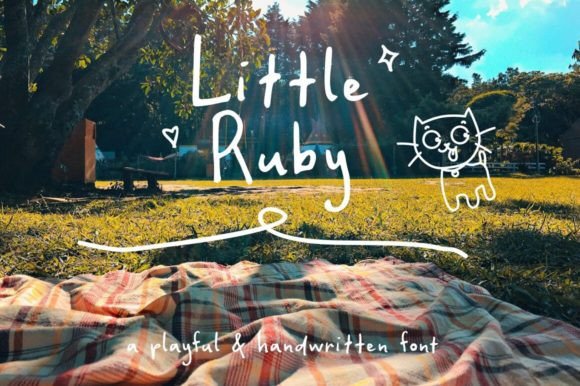
Little Ruby: A Handwritten Font That Gives Your Brand a Fresh Voice
Last month, I sat at my kitchen table with a stack of plain kraft boxes and a sharpie, trying to write product names on them for an upcoming market. The result looked like a kindergartner’s art project—uneven, smudged, and nothing like the cohesive brand I’d imagined. That’s when I realized my business visuals needed more than just a logo; they needed the right typeface to tie everything together. Enter Little Ruby, a cute, playful handwritten font that changed how my brand shows up, from packaging to social media.
Little Ruby is one of those Script Amp fonts that feels like it was made for small business owners who want personality without sacrificing professionalism. It has a refreshing, vibrant aesthetic—bouncy yet legible, charming without being childish. The letterforms carry a natural hand-drawn warmth that instantly makes any design feel approachable. For anyone running a bakery, a skincare line, a boutique, or a café, finding a font that can do double duty—look good on a label and still read clearly on a phone screen—is rare. This one does it.
Why Typography Matters When You’re Growing a Business
I noticed early on that customers form first impressions fast. A pretty product photo can fall flat if the text on it feels generic or hard to read. When I started using Little Ruby on my product labels, the change was subtle but real. People began complimenting the “cute writing” on my candle jars, and a few even said it made the product feel handmade and personal. That’s the power of choosing the right typeface—it communicates care before anyone reads a single ingredient or scent note.
Typography does more than decorate. It builds trust. When every tag, menu, and social post uses the same font, your brand starts to feel intentional. Little Ruby helps create that consistency without needing a designer on retainer. I’ve used it on thank-you cards, sticker sheets, and even the banners on my online shop, and everything finally looks like it belongs to the same family.
Where Little Ruby Shines in Your Daily Business Materials
This font works best as a display typeface—think headlines, product names, short phrases, and logos. It’s not designed for long paragraphs, but that’s exactly what makes it useful. Here are a few ways I’ve put it to work across my brand:
- Product labels and packaging: I run a small candle business, and Little Ruby now appears on every jar label. The playful loops make scents like “Vanilla Bean” and “Lavender Honey” feel warm and inviting.
- Logo design: My main logo uses Little Ruby for the brand name, paired with a clean sans serif for the tagline. It gives the whole identity a handmade, boutique feel.
- Social media graphics: Instagram posts and stories feel more cohesive when the headline font matches the one on my packaging. Little Ruby shows up in sale announcements, new product reveals, and seasonal promos.
- Menus and signage: A friend who owns a small café uses Little Ruby for her specials board and printed menus. Customers often snap photos of the board, which is free word-of-mouth marketing.
- Business cards and thank-you notes: Handwritten-style fonts feel personal. Little Ruby on a thank-you card reads like a genuine note, not a corporate afterthought.
Little Ruby also works beautifully on website banners and product mockups. I’ve used it in my Etsy shop’s header image, and it instantly made the storefront feel more curated. The font pairs well with simple serif or sans serif options—try it with a clean modern sans serif for contrast, or with a subtle serif for an elegant editorial look.
Making Your Brand Look Polished Without Overthinking Design
One thing I appreciate about Little Ruby is that it doesn’t require hours of tweaking. Because it’s a Script Amp font—which means it’s designed with smooth, connected letterforms—it already feels balanced. You don’t need to adjust kerning endlessly or worry about awkward spacing. That’s a win for anyone who’s juggling inventory, orders, and marketing at the same time.
If you’re a handmade seller or a boutique owner, you know how important it is to look professional without losing your personal touch. Little Ruby strikes that balance. It’s not stiff or corporate. Instead, it feels like a friend wrote your brand name with care. That emotion translates directly to how customers perceive your business—more approachable, more memorable.
Readability Tips for Small Labels, Mobile Screens, and Packging
I’ll be honest: not every handwritten font is easy to read at small sizes. Little Ruby performs well on product labels, but I always test it at the actual print size. On a 2-inch candle jar label, the font stays legible as long as I keep the word count short. For longer phrases, I use it as a header and pair it with a clean sans serif for body text.
On mobile screens, Little Ruby holds up nicely for headlines and short callouts. I avoid using it for long descriptions in Instagram captions or product descriptions—that’s where readability matters most. But for a banner title or a sticker, it’s perfect. If you’re designing for social media thumbnails, keep the text large and centered so the playful shapes have room to breathe.
Printed materials like business cards and menus also work well with this font. I’d recommend testing a sample print before ordering in bulk, just to see how the ink sits on your paper stock. Lighter weights may appear thinner on textured paper, while the bolder styles pop nicely on smooth finishes.
What to Check Before You Use Little Ruby Commercially
Before you start slapping this font on every product and packaging item, take a minute to review the license terms. Little Ruby is a commercial font, but every marketplace handles licensing differently. Make sure you know whether your planned use—product packaging, merchandise, templates, client work, or digital downloads—is covered. Some premium fonts require an extended license for certain applications, so it’s always better to check first.
Also, look at what’s included in the file package. Many handwritten Script Amp fonts come with alternate characters, ligatures, and multilingual support. Those extras are gold for creating a unique look. If you’re using Little Ruby for logo design, exploring the stylistic alternates can give you a one-of-a-kind wordmark that nobody else has. And if your brand serves a multilingual audience, confirm that the font supports the characters you need.
File formats matter too. Most premium fonts come in OTF, TTF, and sometimes WOFF for web use. Having multiple formats ensures you can use Little Ruby in design software like Canva or Adobe Illustrator, on your website, and even in some print-on-demand tools. A quick check now saves headaches later.
Font Pairing Ideas That Make Little Ruby Stand Out
Little Ruby is a display font, so it needs a supporting partner for body copy. Here are pairings I’ve tested and loved:
- With a clean sans serif: A simple geometric sans serif keeps the focus on Little Ruby while providing clear body text. This combo works for menus, websites, and product descriptions.
- With an elegant serif: For a more editorial feel, pair Little Ruby with a classic serif. Great for lookbooks, coffee table packaging, or beauty brand labels.
- With another handwritten font: If you want a casual, artisanal vibe, use Little Ruby for headlines and a more subdued script for accents. Just keep contrast in mind so both remain readable.
I personally use Little Ruby with a simple sans serif across my entire brand—packaging, website, and social media. The combination feels modern but handcrafted, which is exactly the personality I want my business to convey. The font’s vibrant energy draws the eye, while the sans serif provides a calm, reliable foundation.
For small business owners, bloggers, and product creators, Little Ruby is more than just a pretty typeface. It’s a practical tool that helps your brand look consistent, polished, and welcoming. Whether you’re designing a logo, printing labels, or building a social media presence, this handwritten font gives your visuals a voice that customers remember. And sometimes, that’s all it takes to turn a casual shopper into a loyal fan.