Why Random Details Is the Script Font I Kept Coming Back To
I was sitting in front of a blank brand board, staring at a mood board full of warm neutrals, dried botanicals, and hand-painted signage. The project was a small café that also sold curated home goods — think pour-over coffee next to ceramic vases and linen napkins. The client wanted a visual identity that felt personal, understated, and a little bit handmade. Not polished to the point of feeling cold, not rough to the point of feeling unfinished. Just something that looked like it belonged to someone who cared about the small things.
That is when I pulled up Random Details. I had downloaded it a few weeks earlier, tucked it into my scripts folder, and honestly, I had not tested it yet. But the name itself caught my eye. And when I typed out the café name on a logo draft, I understood immediately why this font was waiting for the right project.
A Script That Does Not Try Too Hard
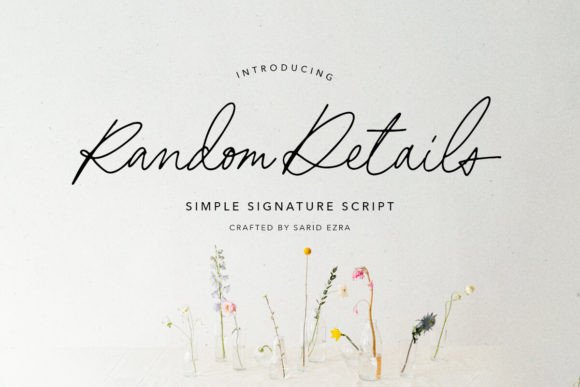
Random Details is a simple and classic signature script, but that description only tells part of the story. What struck me first was how quiet it felt. A lot of signature fonts lean into dramatic flourishes and exaggerated swashes. They are beautiful, but they can dominate a layout. Random Details does the opposite. It curves naturally without calling attention to itself. The strokes feel intentional but unhurried. There is a lightness to how each letter connects, as if someone wrote it with a fine pen on good paper and did not feel the need to impress anyone.
This is a minimalist script font that brings a personal touch to any design without becoming the loudest element in the room. It has a handwritten quality that feels genuine rather than performative. For the café project, that was exactly what I needed. I wanted the logo to feel like the owner wrote it herself on a chalkboard, but with the consistency and polish of a real typeface.
From a technical perspective, Random Details works beautifully as a display font for logos and headlines. Its open letterforms keep readability high even at larger sizes, and the spacing between characters feels balanced without being mechanical. I noticed that the font holds its personality well when scaled down too, which is not always true for script fonts. On a business card or a small product label, it still reads clearly without losing its hand-drawn charm.
Testing It on Real Brand Materials
The first thing I did was place Random Details on a packaging mockup. The café planned to sell small-batch coffee beans in kraft paper bags with a simple sticker label. I set the brand name in the script font at a moderate size, paired it with a clean sans serif for the roast notes and origin details, and instantly the design felt complete. The font gave the packaging a sense of care. It looked like something you would find at a farmer's market, not a grocery chain.
Next, I moved to the shop sign. The client wanted a small wooden sign above the door, maybe twelve inches wide, with the café name painted in white. I mocked it up in Random Details at 120 point and showed it to the client. She said it looked like handwriting she would trust. That is the kind of reaction you want from a script font. It should feel like it belongs to the person behind the business.
I also tested the font on social media graphics, specifically Instagram posts announcing seasonal drinks and new arrivals in the shop. Script fonts can sometimes feel too fancy for social media, but Random Details worked well in short captions and highlighted phrases. I used it sparingly — maybe one line per graphic — and let a clean sans serif carry the rest of the text. That kept the feed looking cohesive without being busy.
Building a Full Brand System Around Random Details
One of the biggest questions when working with a script font is whether it can anchor an entire brand identity. The short answer is that it depends on how you use it. Random Details is not a workhorse font for long body text, and it should not be. It shines as a logo font, a headline accent, and a signature element that appears in key moments across the brand system.
For the café brand, I used Random Details in three specific places: the primary logo, the tagline on the homepage hero section of the website, and the product category headers on the online shop. Everywhere else, I let a neutral serif and a clean sans serif do the heavy lifting. That gave the brand a clear hierarchy. The script font became the visual handshake — the first thing people noticed — while the supporting typefaces handled navigation, product descriptions, and contact information.
When it came to font pairing, I experimented with a few combinations before landing on one that felt right. Random Details paired well with a warm serif font for editorial elements like menu descriptions and about-page copy. The contrast between the script's casual flow and the serif's grounded structure created a natural tension that kept the design interesting. I also tested it with a modern sans serif for digital applications, and that combination worked especially well on the website and email templates.
If you are considering Random Details for a brand project, I recommend testing it against at least two different supporting typefaces before committing. Some scripts only look good with one specific partner, but Random Details is flexible enough to work with both serif and sans serif styles. That versatility makes it a strong choice for designers who want a signature script without being locked into a narrow pairing.
Practical Observations from Real Use
After spending a few weeks working with Random Details across mockups, drafts, and final deliverables, I noticed a few things worth sharing.
First, the font works best at sizes above 18 points. Below that, the thinner strokes can get a little lost, especially on uncoated paper or low-resolution screens. For small text like fine print on a label or footer credits, stick with a clean sans serif. That is not a flaw in the font — most script fonts share this limitation. It is just a reminder to use Random Details where it performs best.
Second, I appreciated that Random Details includes a good set of alternates and ligatures. If you are using the font in a logo or a headline, taking a few minutes to explore the alternate characters can give you a more custom look. I swapped a couple of default letters for their alternate versions in the café logo, and it made the wordmark feel less predictable without losing the font's overall character.
Third, the font handles short-form text exceptionally well. Whether it is a single word on a product label, a short phrase on a poster, or a signature line on a website footer, Random Details adds warmth without overwhelming the layout. I would not recommend it for full paragraphs or long headlines, but for those one-to-five-word moments that define a brand, it is hard to beat.
Where Random Details Fits in a Designer's Toolkit
If you are a graphic designer, brand designer, or freelancer working on visual identities for small businesses, Random Details deserves a spot in your font library. It works well for boutique brands, handmade shops, local restaurants, creative studios, skincare lines, and any project where you want to communicate care and authenticity.
I have used it on packaging design, product labels, business cards, website headers, and Instagram quote graphics. Each time, it did exactly what I needed: it added a human touch without making the design feel amateur. That is a hard balance to strike, and Random Details handles it naturally.
From a licensing standpoint, if you are using Random Details in commercial projects like client branding, product packaging, or digital templates, make sure you check the specific license terms. Commercial font licensing is straightforward with most Script Amp fonts, but it is always worth confirming that your usage is covered. That small step saves headaches down the road, especially if a client decides to expand their brand into new product lines or markets.
For designers who are still building their typeface collection, think of Random Details as a reliable signature script that does not fight for attention. It works alongside other fonts, it holds its own at display sizes, and it brings a quiet confidence to any brand identity. That is a rare combination in the world of script fonts, and it is why Random Details stayed on my brand board long after the café project was finished.
Sometimes the best fonts are the ones that feel inevitable. You try them, they work, and you forget they were ever a question. Random Details is that kind of font for me now. It is simple, classic, and surprisingly versatile for a minimalist script. If you are in the middle of a branding project and you need a signature style that feels personal without being excessive, this is one worth testing on your next mockup.